Why Holding the Mane, Not Just the Neck Strap, Fixes Your Balance at a Fence
If you get left behind, thrown forward, or unseated when a horse stops or takes off unexpectedly, it's usually a hand position problem, not a bravery problem. Dan Bizzarro explains why the mane works better than the neck strap.
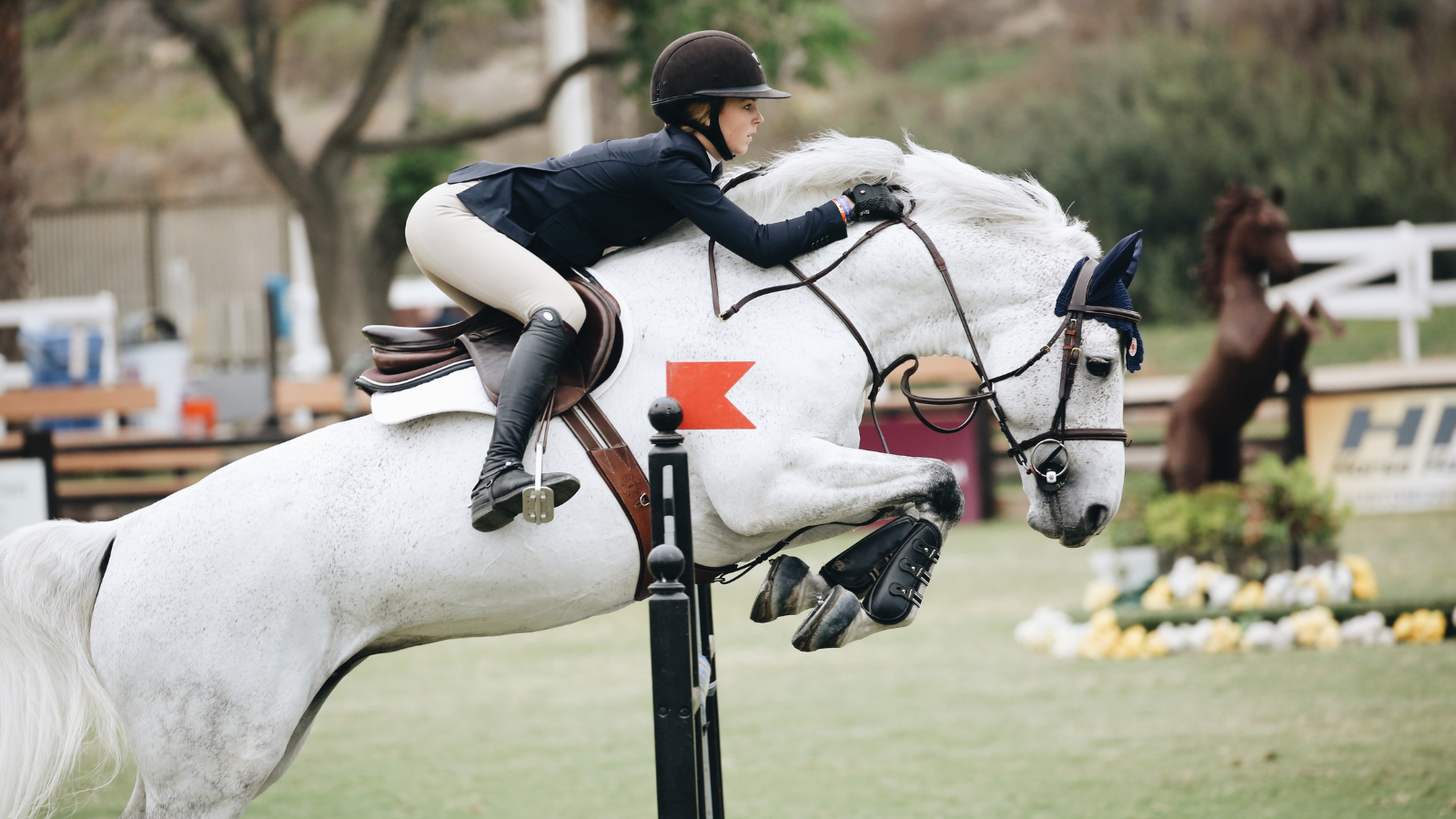
The Strong Horse Solution
Discover the proven techniques Dan uses to build confident, responsive horses that love their work — available as a convenient audio course you can listen to anywhere.
If you get left behind, thrown forward onto the horse's neck, or unseated whenever a horse stops or takes off unexpectedly at a fence, it's very often a hand position problem, not a bravery problem. Hold a piece of mane, well up the neck, with at least one hand, every time you approach a fence. It gives you something to push against if the horse stops, something to catch you with if they take off early, and something to balance on that isn't the horse's mouth.
Why do I keep getting left behind or thrown forward at a fence?
Because most falls at fences don't happen from being out of the saddle, they happen from using your body to try to physically drive the horse into the jump, with nothing to hold onto if the horse doesn't do what you expected.
If your horse stops and you've got nothing in your hands but the reins, you go forward, often straight over the horse's shoulder, because there's nothing stopping your body's momentum. If your horse takes off a stride earlier than you were ready for, the same thing happens in reverse, you get left behind because your hands can't follow the neck far enough forward fast enough. Neither of these is really about the jump. They're about what your hands had available to hold onto in that split second.
Why the mane, not the neck strap or just balance?
Because the mane gives you a moving, adjustable point of contact exactly where you need it, and it doesn't restrict the horse's neck the way a fixed neck strap can.
If your horse stops, you've got something solid to push against rather than pitching forward. If your horse takes off when you weren't expecting it, you've got something that moves with the neck and catches you, so you're not left behind. And on top of both of those, you've got something to genuinely balance on that isn't your horse's mouth, which matters, because balancing on the reins is exactly what teaches a horse to lean and rush at the base of a fence. Holding the mane well forward, close to the ears if you need to, also makes it far easier to stay out of the saddle without gripping upwards with your knees, because your hands are doing the job your balance would otherwise be asking your legs to do.
How do I actually practice this before I need it for real?
Practice it with no fence there at all. Trot or canter towards an imaginary fence, stand up out of the saddle, hold the mane, and hold that position for several strides before you sit back down.
If you're not comfortable staying out of the saddle in trot, holding the mane, for four or five strides with nothing in front of you, you're not going to suddenly find that comfortable the moment there's an actual fence to worry about as well. Build the position first, separately from the jump, then add trotting poles, then canter poles, then small fences. If a horse accelerates going over trotting poles when you haven't practised this, they'll do exactly the same thing going over an actual fence, so it's worth sorting out on the flat first, where there's nothing else to think about.
What does this have to do with confidence?
Almost everything. A rider who trusts their position isn't spending mental energy bracing for the worst case on every stride into a fence, which frees them up to actually ride the canter and the line properly.
This isn't a technique for less capable riders, it's something used constantly by professional riders, including across country, where the ground and the questions change every few strides. Riders who use it well don't think about it consciously anymore, their hand simply finds the mane on the way to a fence, the same way you don't think about where your feet are on a staircase you know well. That automatic habit is what actually removes the fear of being caught out, not a decision to "be braver" on the day.
A real example from a lesson
I had a rider recently who'd come off after a stop and broken her ankle. The instinct afterwards is always to blame the stop itself, or the turn, or not having enough canter. All of those things mattered a little, but the actual reason she came off was that when the horse stopped, she had nothing in her hands to hold onto and went straight over his shoulder.
We spent the whole of the next session working purely on the mane position, first at halt, then in walk, then trotting towards imaginary fences and standing out of the saddle for several strides holding on. Only once that felt completely unremarkable in trot did we bring poles back in, and only after that did we jump anything at all. By the time we did, the fences themselves were almost a non-event, because the one thing that had actually caused the fall, having nothing to hold onto if things didn't go to plan, had already been fixed on the flat.
Where this fits into your jumping
Canter quality and a good line matter, and I've written about both elsewhere. But neither one protects you the moment your horse does something you didn't expect, and that's the gap the mane closes. It's a small, unglamorous habit that quietly removes a huge amount of the fear around jumping, because you stop needing every single fence to go perfectly to stay on board.
If you want to work through this on your own horse, a private lesson or a clinic is the fastest way to build the habit properly, and the underlying confidence work around a strong or unpredictable horse is covered in depth in the Strong Horse Solution audio course.
Frequently Asked Questions
Why is holding the mane better than a neck strap?
The mane lets you take a piece of contact well forward, up the neck, wherever you actually need it, and adjust as you go. A neck strap is fixed in one place, which isn't always where your balance point needs to be.
Isn't holding onto the horse a sign I'm not a confident rider?
No. Professional riders use it constantly, including across country. It's not a crutch for weaker riders, it's a genuine balance tool that reduces how often you get left behind or catch the mouth.
Which hand should hold the mane?
Whichever feels natural, one hand or both, as long as it's forward enough that it doesn't restrict the horse's neck when they stretch to jump.
Will this stop my horse running at the fence?
No, that's a separate issue with canter quality and rider confidence, not hand position. What this fixes is what happens to your body if the horse stops or takes off when you're not expecting it.
How do I practice this without a fence in front of me?
Trot or canter towards an imaginary fence, stand up out of the saddle, hold the mane, and hold that position for several strides. If it feels hard in trot with nothing there, it will feel harder over an actual fence.
Does this work for cross country too?
Yes, and it's arguably more useful there, since the ground and the questions change constantly. Riders who use it well across country often don't even think about it, it's simply automatic.
10 Points Better in Your Dressage Test
Eight audio ride-along lessons that improve your geometry, transitions, and test preparation — listen while you school and feel the difference in your scores.
More Articles
Why a Simple Training Diary Improves Your Riding Faster Than Your Next Lesson
You won't remember what actually worked last week, even if you think you will. Dan Bizzarro explains the two-minute training diary habit that turns hazy progress into a pattern you can actually use.
Why More Transitions Can Make Your Horse Tighter, Not Softer
If your horse gets shorter and shufflier the more transitions you ride, the problem isn't the transitions, it's what your hands do the moment she gets tight. Dan Bizzarro explains the snap circle fix.