Why a Simple Training Diary Improves Your Riding Faster Than Your Next Lesson
You won't remember what actually worked last week, even if you think you will. Dan Bizzarro explains the two-minute training diary habit that turns hazy progress into a pattern you can actually use.
The Strong Horse Solution
Discover the proven techniques Dan uses to build confident, responsive horses that love their work — available as a convenient audio course you can listen to anywhere.
A short note after every session, what you worked on and how the horse felt, is one of the most useful habits you're probably not doing. It takes under two minutes. The reason it matters is simple: you will not accurately remember how last week's session went, let alone three weeks ago, and that's exactly the information you need to actually improve.
Why can't I just remember how a session went?
Because you're not just remembering one session, you're trying to remember dozens of them, and your brain keeps the feeling, not the detail.
You might genuinely remember this week. Ask yourself honestly what you did with your horse two Tuesdays ago, and how they felt, and most riders draw a blank. That's not a memory failing, it's just how memory works when nothing forces you to write the detail down. And it's the detail that tells you something useful, not the general impression that "it's going alright" or "she's been a bit stronger lately."
What should I actually write down?
What you worked on, and how the horse felt, including anything that stood out, whether that's good or bad. That's genuinely most of it.
Did the horse take a long time to warm up and soften today? Did they feel unusually fresh, and did that eat into your session? Did yesterday's harder schooling session leave them looser today, or stiffer and sorer? These small, specific notes are what let you go back and actually answer the question "why did today go well" or "why did today go badly," instead of guessing. If you can, note the plan in the morning when you decide what you're working on, then a couple of honest lines at the end of the day on how it actually went.
How do I actually use it to improve things?
You use it by going back to it, on both good days and bad ones, and looking for what's actually true about that horse rather than what you assume is true.
Say your horse felt brilliant today. What did you do yesterday, and the day before? Was that a pattern, or a one-off? Say your horse felt stiff and reluctant today. What happened in the last session, and does that keep happening after the same type of work? Some horses genuinely go better the day after a harder schooling session, looser and more supple. Others feel sore and stiff to start with the next day, even though the work itself was correct. You can't tell the difference between those two horses from memory. You can tell the difference from three weeks of honest notes.
What did this actually look like for a professional rider?
One of the clearest examples I picked up was from William Fox-Pitt, who used to ask every rider, every horse, every day, to write a couple of lines in a diary. What the plan was in the morning, and what actually happened by the end of the day, sitting right next to each other.
It sounds almost too simple to matter, but it's genuinely amazing how well it works, and how much it changes over time. From around the point he won Kentucky, he kept exactly the same routine for whichever horse was heading there, repeated for the last two or three weeks before travelling. When Cool Mountain followed the same route a few years later, it included doing a proper piece of canter work the day before the horse flew out, something you'd think would be the wrong call given how much travelling and standing around was coming next. But the diary showed it worked, consistently, and so it stayed in the plan rather than being something he had to re-decide from scratch, or worse, forget about, every single time.
A real example from a lesson
I had a lesson recently where the rider mentioned her mare tends to get quite hot and tight the more transitions we do indoors, breaking up into short bursts, walking a square, trying again. Without a diary, that's just "she's difficult in the indoor sometimes." With even a rough note kept over a few weeks, it becomes a genuine pattern you can test, does she need longer in walk before you ask anything, does the surface or the space change it, does she settle faster on the lunge first. The exercise you use to fix it is only half the job. Knowing which exercise this particular horse actually needs, based on what's worked and what hasn't over real sessions, is the other half, and that only comes from notes, not memory.
Where this fits into your training
None of this replaces good exercises or good coaching. What it does is stop you relearning the same lesson about your own horse over and over, because you genuinely forgot what you'd already found out. Two minutes after each session is a small price for that.
If a notes app or a page in a notebook feels like one more thing to remember, the planner in the Dan Bizzarro Method app is built for exactly this. It helps you schedule each horse's week and log how a session actually went against what you'd planned, so the pattern is sitting there waiting for you rather than something you have to reconstruct from memory later.
This kind of pattern spotting, working out exactly what a specific horse needs rather than applying the same plan to every horse, is at the heart of the 10 Points Better audio course, built around small, trackable improvements session to session. If you'd like a second pair of eyes on what your notes are actually telling you, that's exactly the kind of thing we go through in a private lesson.
Frequently Asked Questions
How long should a training diary entry take?
Under two minutes. A few honest lines about what you did and how the horse felt is enough. It only fails if it becomes a chore you stop doing.
What should I actually write down after a session?
What you worked on, and how the horse felt, including anything unusual, whether that's better or worse than normal. Note the plan in the morning and the result in the evening if you can.
Isn't this just for professional riders with lots of horses?
No, it matters just as much with one horse. You might remember this week. You won't reliably remember three weeks ago, and that's exactly when the useful pattern shows up.
What kind of pattern am I actually looking for?
Things like whether your horse goes better or worse the day after a hard schooling session, how long a particular horse needs to warm up before they soften, or which exercises you've quietly stopped using without meaning to.
Do I need a special app or notebook for this?
No, any format works, a notes app, a diary by the tack room, or a page in a notebook. The format matters far less than actually writing something down every time you ride. If you'd rather have it built for you, the planner in the Dan Bizzarro Method app lets you schedule each horse's week and log how sessions actually went in one place.
What if I only have bad things to write after a difficult session?
Write it anyway. A bad session with an honest note about what happened is often more useful later than a good one, because it's the one you'll want to understand in three weeks' time.
10 Points Better in Your Dressage Test
Eight audio ride-along lessons that improve your geometry, transitions, and test preparation — listen while you school and feel the difference in your scores.
More Articles
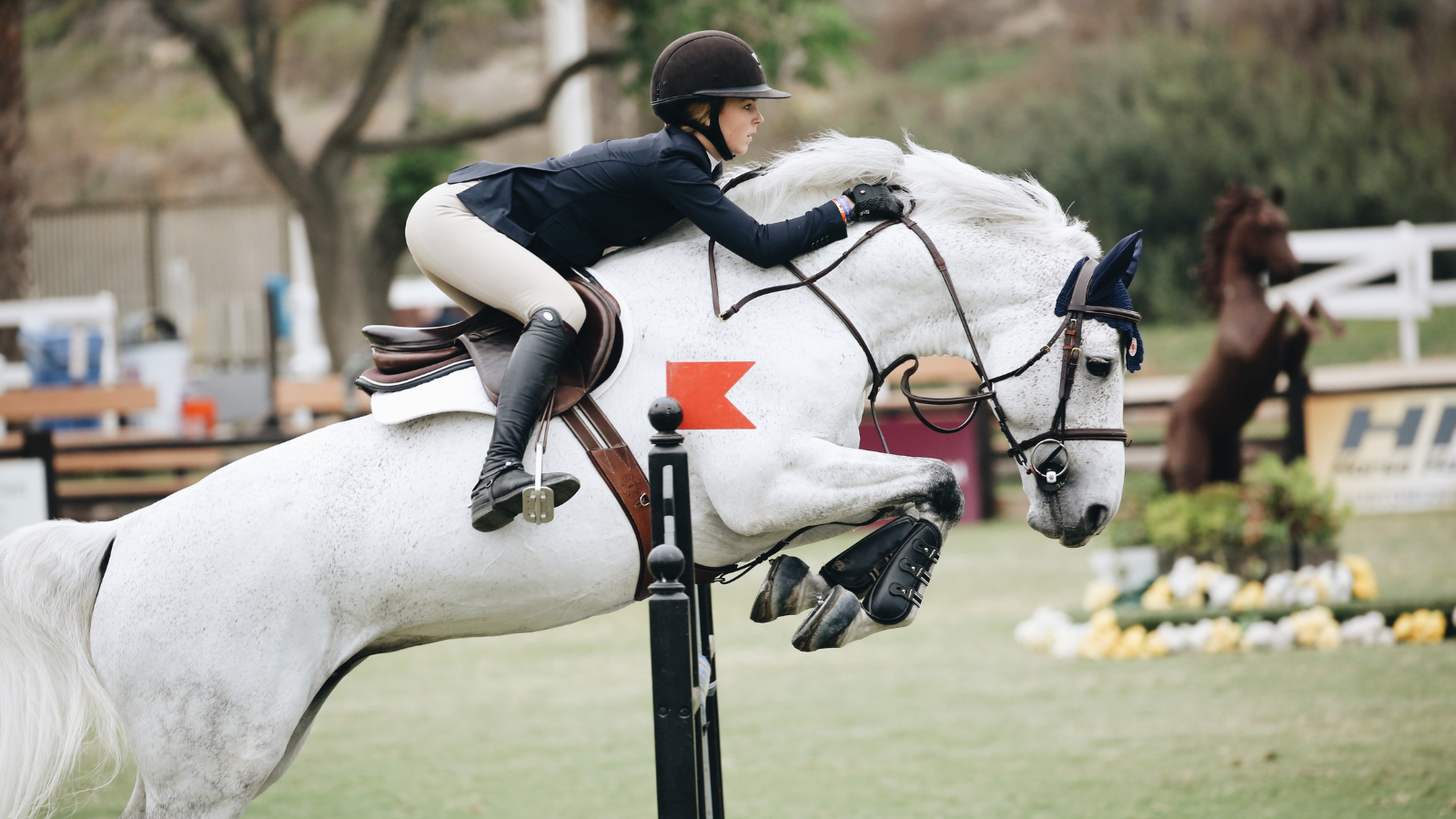
Why Holding the Mane, Not Just the Neck Strap, Fixes Your Balance at a Fence
If you get left behind, thrown forward, or unseated when a horse stops or takes off unexpectedly, it's usually a hand position problem, not a bravery problem. Dan Bizzarro explains why the mane works better than the neck strap.
Why More Transitions Can Make Your Horse Tighter, Not Softer
If your horse gets shorter and shufflier the more transitions you ride, the problem isn't the transitions, it's what your hands do the moment she gets tight. Dan Bizzarro explains the snap circle fix.